
Test cricket rewards reading the match across sessions and innings. Understand leads, declarations and the difference between a draw and a tie, then see why the state of the pitch can matter as much as the score. Begin with the match position rather than a single headline total.
Table of Contents
A route through test cricket
Build your understanding of test cricket in stages. Each step adds context that a headline or a short score line can leave out.
Start with the vocabulary
Use the main guide to identify the terms that appear most often in test cricket. Clarify the format and the innings before moving to a more detailed explanation.
Connect terms to a scorecard
Open a completed match record and locate the batting card, bowling figures and fall of wickets. This makes it easier to connect a definition with an actual part of an innings.
Consider match resources
Track wickets and deliveries as well as runs. The same score can describe different situations when one side has more overs or more established batters available.
Check competition details
If a question depends on a revised target, review procedure or tie-break, use the current event regulations. General explanations cannot replace a competition-specific rule.
A closer look at test cricket

Urban Green Cricket focuses on explaining test cricket for readers following cricket in India. The aim is to make the match easier to understand through definitions, examples and context.
Read the guideRules and formats: MCC Laws of Cricket · ICC playing conditions · ICC format guide
Cricket grounds and match themes
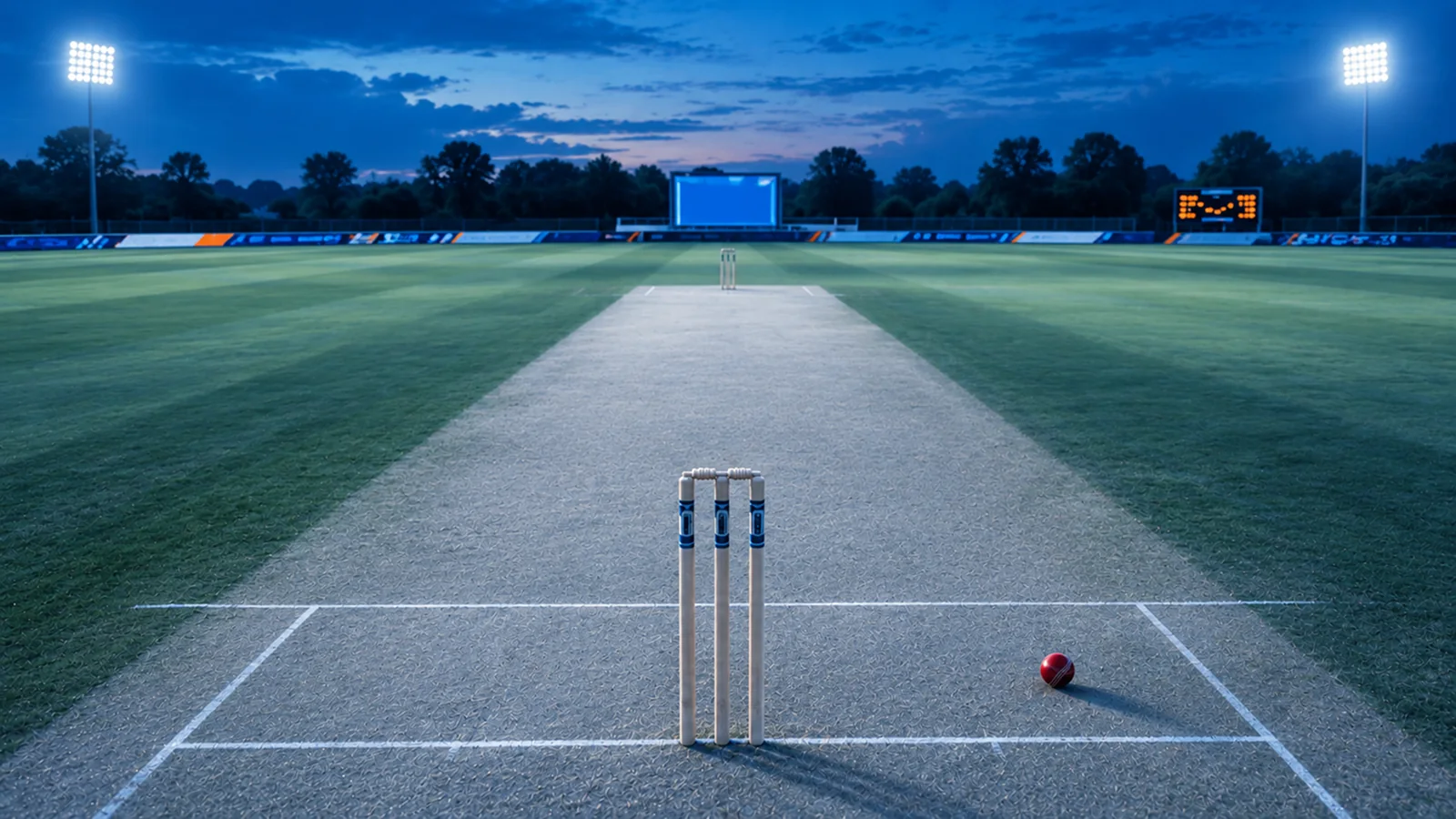
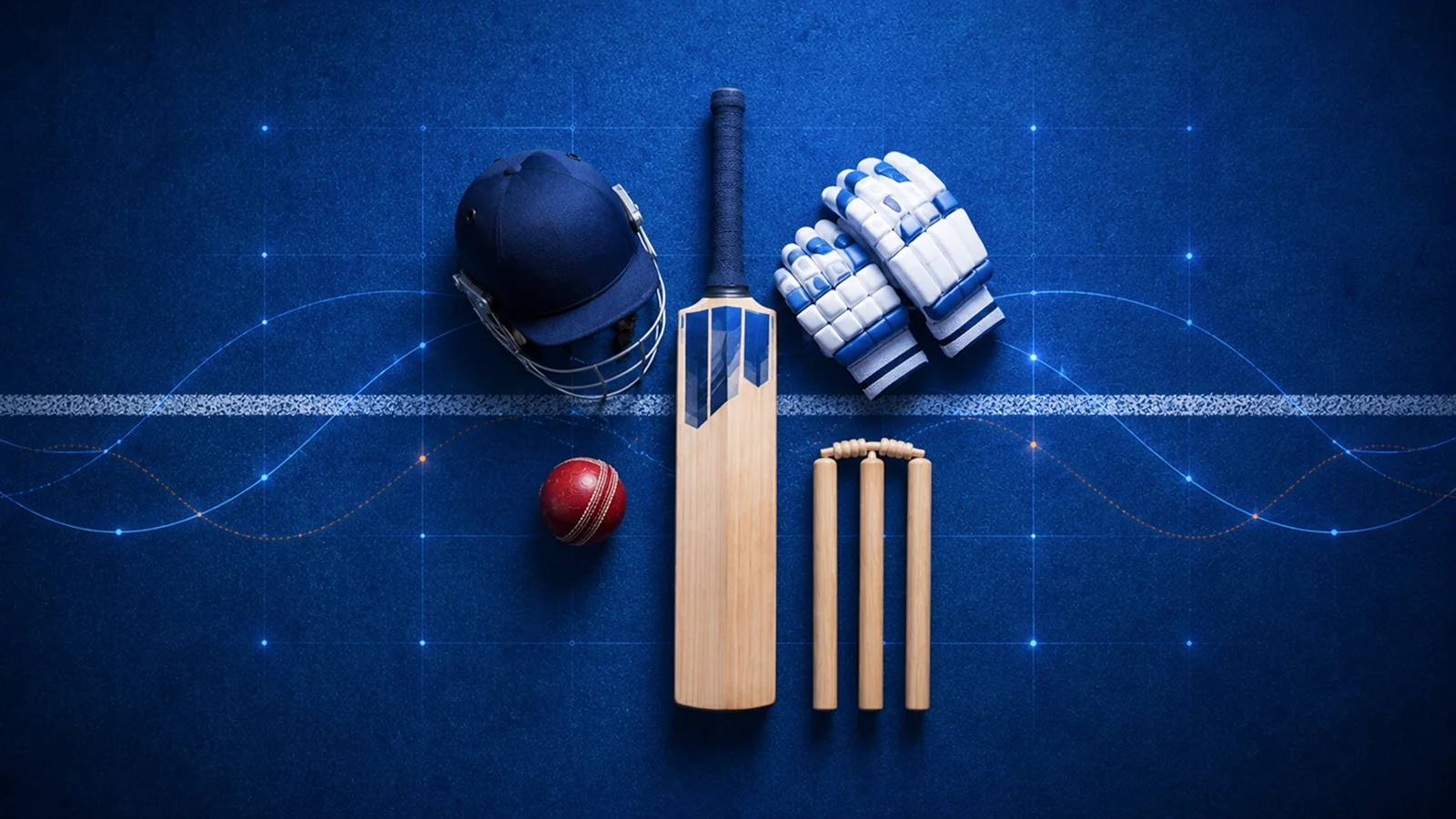
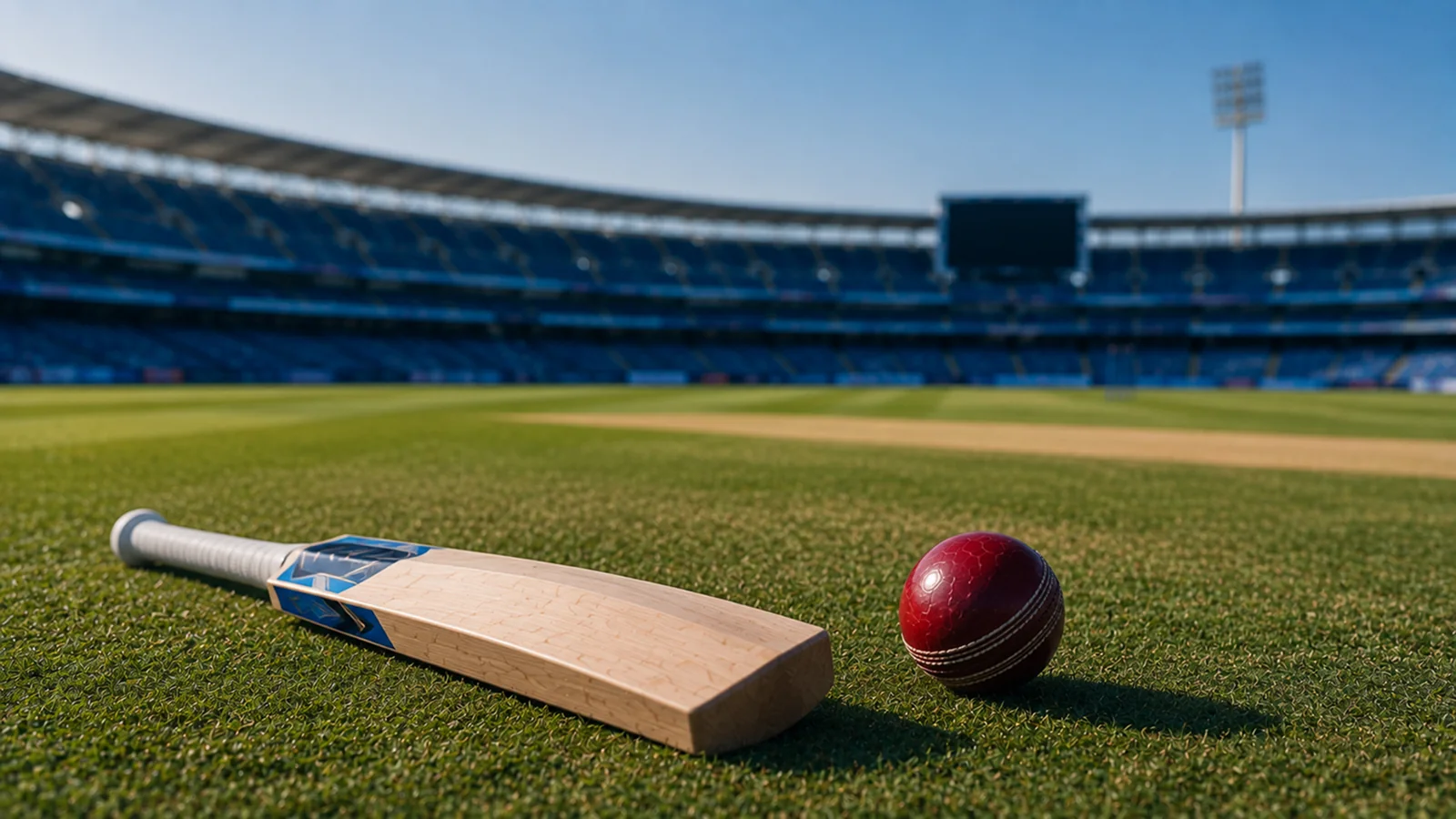
Selected cricket illustrations introduce the formats, conditions and competitions discussed in this guide. These images are thematic, rather than photographs documenting a specific fixture.

The centre of the field
The pitch and wickets provide the reference points for batting, bowling and scoring.

Limited-overs cricket
T20 and ODI matches use different innings lengths and competition conditions.

The match setting
The outfield, boundary and surroundings add context to a scorecard.

Batting equipment
The bat, ball and protective equipment are part of the visual language of cricket.
Tournament cricket
League and international events have separate schedules and match records.

Reading the conditions
Ground illustrations provide context without claiming to document a current pitch report.
Keep the cricket context in view
Use the test cricket guide to connect definitions with the match you are following. Check current fixtures, line-ups and results at their official source. Read more at Cricketin.
Test cricket allows up to two innings for each team. The first-innings scores establish a lead or deficit, while the later innings can set a target. A team total is therefore only one part of the match position, and innings labels are essential.

Lead, deficit and target
Match context
A first-innings lead means one side has scored more in its opening innings than the other. A fourth-innings target is the total needed to win the match. Read the combined innings position carefully before interpreting a lead shown beside a current score.

The changing pitch
Match context
A surface can behave differently as a match progresses. Wear, moisture and weather can affect the way the ball moves or bounces. Treat a pitch description as context rather than certainty, and compare it with what the bowlers and batters actually experience.

Two innings per side
Match context
Test cricket allows up to two innings for each team. The first-innings scores establish a lead or deficit, while the later innings can set a target. A team total is therefore only one part of the match position, and innings labels are essential.
Lead, deficit and target
Match context
A first-innings lead means one side has scored more in its opening innings than the other. A fourth-innings target is the total needed to win the match. Read the combined innings position carefully before interpreting a lead shown beside a current score.

The changing pitch
Match context
Keep the cricket context in view
Use the test cricket guide to connect definitions with the match you are following. Check current fixtures, line-ups and results at their official source.
Read the sections below with the match format and innings in view.
Understand test cricket
These explanations connect test cricket with the match record. Read each detail alongside the format and the state of the innings.
Two innings per side
Test cricket allows up to two innings for each team. The first-innings scores establish a lead or deficit, while the later innings can set a target. A team total is therefore only one part of the match position, and innings labels are essential.
Sessions and available time
A scheduled Test is usually played across up to five days. Sessions divide the playing day, with intervals and possible interruptions. Time remaining influences tactics: scoring enough runs and leaving enough opportunities to take wickets are related but different objectives.
Lead, deficit and target
A first-innings lead means one side has scored more in its opening innings than the other. A fourth-innings target is the total needed to win the match. Read the combined innings position carefully before interpreting a lead shown beside a current score.
Why a captain declares
A declaration ends an innings voluntarily. It can create time to bowl at the opposition instead of continuing to add runs. Whether it was well timed depends on the target, conditions, bowling resources and the possibility that the other side can chase successfully.
How to follow test cricket
Use this sequence when a match report or scorecard sends you looking for a clearer explanation of test cricket.
Confirm the match
Start with the team category, date and competition. Check whether the fixture is a Test, ODI or T20 before applying an explanation to its scorecard.
Read the innings position
Use the innings label, runs, wickets and valid balls to establish the position. That gives the discussion of test cricket a clear starting point instead of an isolated number.
Add the conditions
Consider the surface, the phase of the innings and the available players. Those details can change the meaning of a scoring rate or a bowling spell.
Check the official record
For a disputed detail, return to the official match record and the event’s playing conditions. Keep the recorded event separate from commentary about its importance.
Test cricket: common questions
How long does Test cricket last?
A standard scheduled Test is usually set for up to five days, but a result can come earlier and weather may reduce play.
How many innings are in a Test match?
Each team can have up to two innings. A match can finish without all four innings taking place.
What is a declaration?
The batting captain voluntarily closes the innings, often to leave time for the team to try to bowl the opposition out.
Is a draw the same as a tie?
No. A draw is an unfinished result within the available time; a tie has equal completed match scores under the applicable conditions.
What does a first-innings lead show?
It is the difference between the teams’ first-innings totals. It is separate from a final-innings target.
Does this page show Test cricket live?
No. It explains the format and match position. For current play, check an official fixture page or a timestamped live score service.